
The Stuttgart employer market, seen from HR
The Stuttgart region is where Mercedes-Benz, Porsche, and Bosch have their headquarters, and around them sits the densest network of automotive suppliers and machinery builders in Europe: from Esslingen and Göppingen along the Neckar, through Böblingen and Sindelfingen, to Ludwigsburg, Heilbronn, and the Swabian Alb around Reutlingen. A large share of these companies are family-owned, often in the second or third generation, with a plant, a three-shift operation, a works council that has been there for decades, and a company culture built on continuity, precision, and discretion. Alongside sit the software and IT firms that serve the automotive industry, the research institutes around the university, and a growing but still small start-up scene.
The region is also in the middle of a structural change that touches HR in every company. The shift from combustion engines to electric drives and software removes some product lines, creates others, and changes the skills the plant needs. Suppliers of engine components are reducing; suppliers of battery, power electronics, and software components are hiring; and many companies are doing both at once. That produces, in my observation, more restructurings with social plans and more qualification programmes per company than any other German region, and it puts the HR lead in the middle of negotiations with the works council that run for a year or longer.
The market for experienced HR leads reflects that. Companies with 50 to 500 employees compete with the big three and with Bosch for the same profiles, on pay they cannot match, and the profile they need is specific: metal and electrical collective agreement, plant experience, a track record with IG Metall works councils, and increasingly English for a new foreign owner or a group headquarters abroad. Searches take five to seven months. In the middle of a transformation, that is a long time for the layers below the HR lead to drift.
Typical HR situations in Stuttgart mandates
A supplier reduces one line and builds another
Two hundred people in the combustion line, a social plan to negotiate, a qualification plan for the eighty who can move to the new line, and hiring for the rest. Reconciliation of interests, social plan, and a works council that has done this before and will test every number.
The HR lead of a family firm retires after 25 years
Everything is in her head: the grading logic under the collective agreement, the works council relationship, the temporary staff arrangements, the payroll provider. No documentation. The owner needs someone who holds it and writes it down before the successor arrives.
A foreign group buys a Swabian machinery builder
New owner, old works council, a group HR system that needs a works council agreement, reporting in English, and a plant that has never seen an owner who does not speak the dialect. Translation in both directions, procedure explained, trust built.
Plant, agreement, processes, lead: how a mandate works through the layers
On-site every day, on every shift at least once. Shift plans, temporary staff contracts, overtime patterns, the open cases, and the people who run the floor. The assessment starts at the bottom.
The applicable agreement read in full, the grading checked against it, the existing works council agreements listed, the chair met in week one. Deadlines into a calendar the owner can see.
Recruiting for plant and office, payroll oversight, contracts, qualification programmes, HRIS. What lived in the predecessor's head goes on paper. The team gets decisions and priorities.
One accountable person for HR in the owner's or managing director's meeting, one Friday report, one counterpart for the works council. Then the handover to the permanent successor.
The order matters. An HR lead who starts with the processes and meets the works council chair in month two has already lost the chair. In the Neckar region the works council chair often knows the company better than the owner's children do, and the relationship with that person decides whether the mandate runs smoothly. The role in full, with the four-week mutual trial period and the handover as a deliverable, is on Interim HR Manager. A transformation with a social plan is a project with its own timeline, described under Restructuring and Social Plan.
The presence model: a commute from Frankfurt
Frankfurt to Stuttgart Hauptbahnhof takes around an hour and twenty minutes by ICE via Mannheim, with departures roughly every half hour. That makes Stuttgart a commute rather than a hybrid arrangement with hotel nights: three fixed on-site days a week as the standard, the first two weeks fully on-site, and four or five days during a restructuring, a works council negotiation, or the integration after a takeover. An extra day at short notice, for example when the works council calls an extraordinary session about the shift plan, is possible the same week.
The supplier and machinery belt is reached from the Hauptbahnhof by S-Bahn and regional train: Esslingen, Ludwigsburg, Böblingen, and Sindelfingen within twenty to thirty minutes, Göppingen, Heilbronn, and Reutlingen within forty to sixty. On-site days are planned for wherever the plant and the works council are, and in a three-shift operation they are shaped around the shift handovers rather than around office hours. Travel within the standard rhythm is a flat arrangement in the services contract. The day-rate logic, and what it replaces, is under What an Interim HR Manager costs.
The metal and electrical collective agreement and the works council
A collective agreement (Tarifvertrag) is an industry-wide contract between an employers' association and a trade union that sets pay grades, working hours, holiday, and a range of other terms for every employer bound by it. In the Stuttgart region the agreement that matters is the metal and electrical industry agreement for Baden-Württemberg, negotiated between the employers' association Südwestmetall and the union IG Metall, and it is historically the pilot agreement for the whole country. It runs to hundreds of pages, it defines a grading system with detailed job evaluation rules, it sets a working week that companies can vary only within defined corridors, and it has its own rules on qualification and on partial retirement. An HR lead who does not know it cannot grade a job, approve overtime, or plan a reduction correctly.
The works council (Betriebsrat) is the elected employee body that German law provides for in establishments with five or more permanent employees, and in the Neckar region it is typically decades old, IG Metall-trained, and represented on the supervisory board in companies above five hundred employees. Under Section 87 of the Works Constitution Act (BetrVG) it has a consent right on working time, shift plans, overtime, pay structures, and technical systems capable of monitoring performance. Under Section 99 it is involved in every hiring, transfer, and regrading. Under Section 102 every dismissal needs a prior hearing. Under Sections 111 and 112 a reduction or a plant change requires a reconciliation of interests and a social plan, which in an IG Metall environment is negotiated by people who have done it many times.
For a foreign owner or a group headquarters abroad, the essential briefing is that none of this is negotiable at company level and none of it is hostile. It is procedure, and it is predictable once understood. My routine in Stuttgart is the one from every mandate: works council chair met in the first week, in German, on the shop floor rather than in the boardroom; sessions minuted and shared; an English briefing for the owner or the group afterwards; a deadline calendar the leadership team can see. How performance reviews are built so that line managers apply them, with or without a works council, is described in the case study Building Talent Management Processes That Line Managers Actually Use.
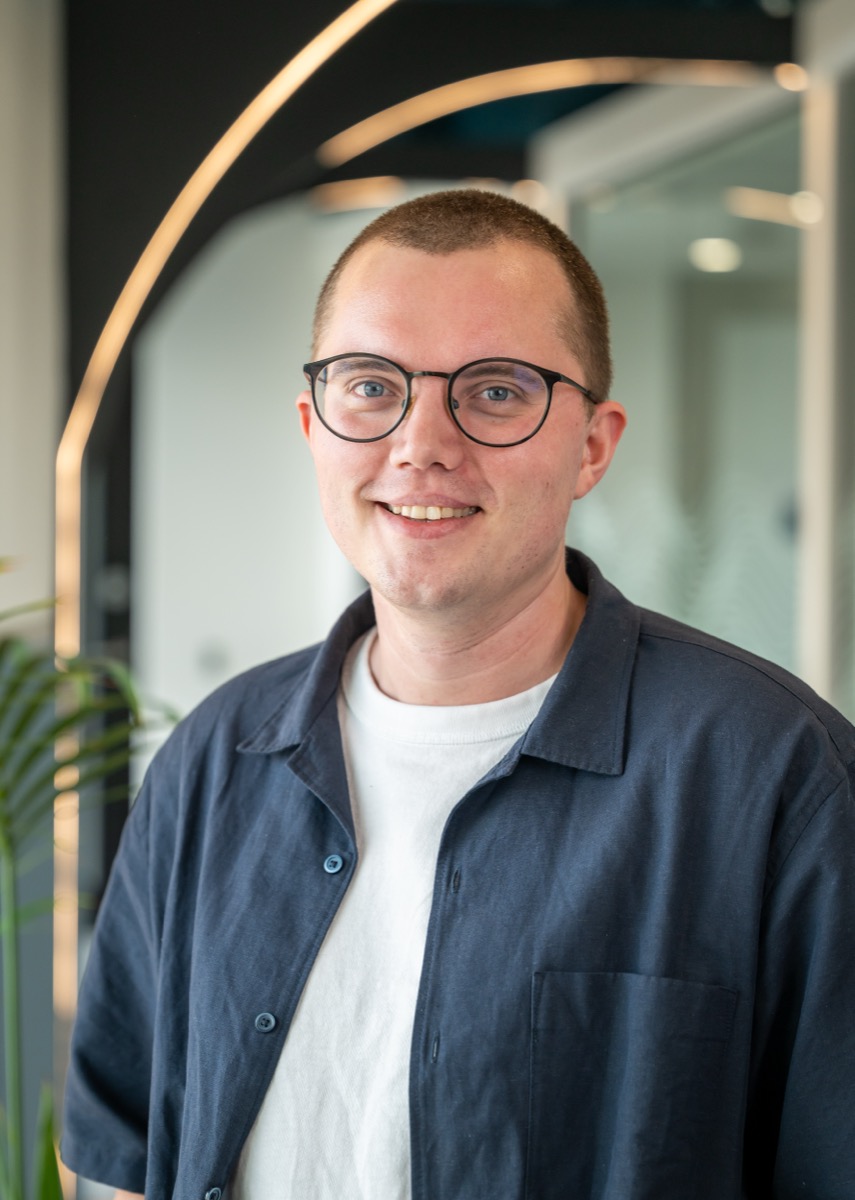
Reorganisation across nine countries at a software company, carried out in full compliance with employment law and co-determination; works council experience from a bank and a consumer goods group; payroll and global mobility built at an engineering services firm. More about me
Frequently asked questions about Stuttgart
Do you have experience with plants, shift work, and the metal and electrical collective agreement?
Not shift work on a plant floor in my own line responsibility, and I say so openly. What I bring is industrial experience with restructuring and co-determination: a reorganisation across nine countries in three months at a software company, talent management processes at a consumer goods group, system rollouts negotiated with the works council at a bank. The metal and electrical agreement negotiated by IG Metall, which covers most Stuttgart suppliers and machinery firms, has its own grading and working time rules, and I read those documents before the first on-site day.
How often are you in Stuttgart?
Three days a week as the standard, the first two weeks fully on-site, and four or five days during a restructuring or a works council negotiation. Frankfurt to Stuttgart Hauptbahnhof is around an hour and twenty minutes by ICE, so it is a commute without hotel nights.
Our company is family-owned and has never had an external interim manager. Is that a problem?
It is the normal starting point in the Neckar region, and it needs a different approach from a scale-up. The owner family, the long-serving works council chair, and the plant managers expect continuity and discretion. I work inside that culture, not against it, and the handover to a permanent successor is part of the contract from day one.
We are in the middle of the combustion-to-electric transformation and need to reduce and requalify at the same time. Can one interim HR manager handle that?
That is the core Stuttgart mandate. It combines a reconciliation of interests and a social plan under the Works Constitution Act with a qualification plan under the collective agreement, and it runs over a year or more. Whether it is one role or a role plus a project is decided on the first call.
Do you also cover Esslingen, Ludwigsburg, Böblingen, Sindelfingen, Heilbronn, and Reutlingen?
Yes. The supplier and machinery belt around Stuttgart is reachable by S-Bahn or regional train from the Hauptbahnhof within twenty to fifty minutes, Heilbronn and Reutlingen a little longer. On-site days are planned for wherever the plant and the works council are.
Our parent is a US or Chinese group that bought the company. Do you work with foreign owners of a Swabian Mittelstand firm?
Yes, and the mismatch between a new foreign owner and an old works council is one of the situations where an interim HR manager earns the day rate. The owner gets German procedure explained in English; the works council gets a counterpart who knows the collective agreement and does not need the process explained.