The Frankfurt employer market, seen from HR
Frankfurt am Main is the densest employer market in Germany outside Berlin and Munich, and the most international one. The city hosts the European Central Bank, the German stock exchange, the largest airport in the country, and the German or European headquarters of several hundred foreign groups, many of them American, British, Japanese, and Korean. For an HR function, that density has one direct consequence: an open HR lead position competes with banks, insurers, consultancies, and international headquarters for the same experienced profiles, and a search that takes four months elsewhere in Germany takes five or six here.
For companies with 50 to 500 employees, the market has a second characteristic. A large share of them are the German entity of an international group, run by a country manager who reports abroad and by a leadership team that works in English. The HR lead in such an entity is often the only person who holds both worlds: the group's people processes and templates on one side, German employment law, the works council, and the collective agreements on the other. When that person leaves, the country manager discovers how much German-specific knowledge sat in one head.
The sectors are more varied than the banking image suggests. Financial services and their service providers are the largest employer group. Then come professional services, logistics around the airport and along the Main, chemicals and pharma in the Höchst industrial park and towards Darmstadt, software and consulting in the city and in Eschborn, and a growing fintech and scale-up scene. Each has its own HR rhythm, and I have worked in several of them, including financial services, software, and international consumer goods.
Typical HR situations in Frankfurt mandates
The HR lead of a subsidiary leaves
The group's regional HR director asks who now signs contracts, hears the works council, and knows the collective agreement. The answer is nobody, and the search will take five months in this market.
The entity outgrew its HR setup
From 70 to 220 people in three years through the group's European expansion. An HR generalist and an assistant run payroll and contracts, but nobody builds processes, and the works council has just been elected.
A carve-out or integration lands in Frankfurt
The group sells a division, buys a competitor, or merges two German entities. Contracts, pay bands, systems, and co-determination have to be merged or separated, on a deadline, with a works council on each side.
What these situations share is that the group's HR function abroad cannot cover them. German employment law is procedural, the works council has statutory rights that an American or British HR team has no equivalent for, and the collective agreements in banking, chemicals, and metal industries are documents with several hundred pages each. An interim HR manager who knows those documents and speaks the group's language is the bridge until the permanent successor is found and onboarded.
Rhine-Main, city by city
The presence model in Rhine-Main
In Frankfurt and the surrounding cities I am on-site as often as the mandate needs, and that is decided by the mandate, not by my calendar. A vacancy cover in a stable subsidiary usually settles at two or three fixed days a week on-site and the rest remote. A restructuring with works council negotiations, a carve-out, or the first months after a merger start with four or five days a week on-site and reduce once the critical meetings are behind us. In the first two weeks of any mandate I am on-site every day, because taking stock of open cases, deadlines, and relationships does not work over video.
The practical point for a country manager is that on-site in Rhine-Main costs no travel expenses and no hotel. Darmstadt, Offenbach, and Hanau are shorter commutes than many Frankfurt residents have within the city. Wiesbaden and Mainz are a reliable S-Bahn ride. That is the difference from the other regional pages on this site, where hybrid means fixed travel days with an ICE ticket. Here it means I come in when you need me, including at short notice when the works council calls an extraordinary meeting.
Works council culture and language in Frankfurt
The works council (Betriebsrat) is the elected employee body that German companies with five or more employees may have, and in Frankfurt most companies above a hundred people do. The culture varies by sector. In banking and insurance, works councils are experienced, well advised, and used to formal procedures; a hearing before a dismissal follows a script, and a badly prepared one fails. In the chemical parks and the Hanau industrial companies, works councils are often long-serving and closely tied to the trade union, and co-determination on shift plans and systems is a daily routine. In the software and scale-up scene, works councils are frequently new, sometimes elected during a period of unrest, and the first year of the relationship sets the tone for the next ten.
For an international leadership team, the recurring surprise is that the works council's rights are not a matter of company policy. Under Section 87 of the Works Constitution Act (BetrVG), the works council has a consent right on working hours, pay structures, and any technical system capable of monitoring behaviour, which in practice includes the HR system, the time tracking tool, and any AI tool for screening. Under Section 102, every dismissal requires a prior hearing. I meet the works council in the first week of every mandate, before the first hearing is due, and I run those meetings in German. Leadership meetings, group reporting, and candidate interviews for international roles run in English. Both languages at native working level are, in this city, part of the job description, not an extra.
What a mandate looks like in detail, from the first call to the handover, is on the role page Interim HR Manager. How the day rate is built, and what to compare it against, is under What an Interim HR Manager costs.
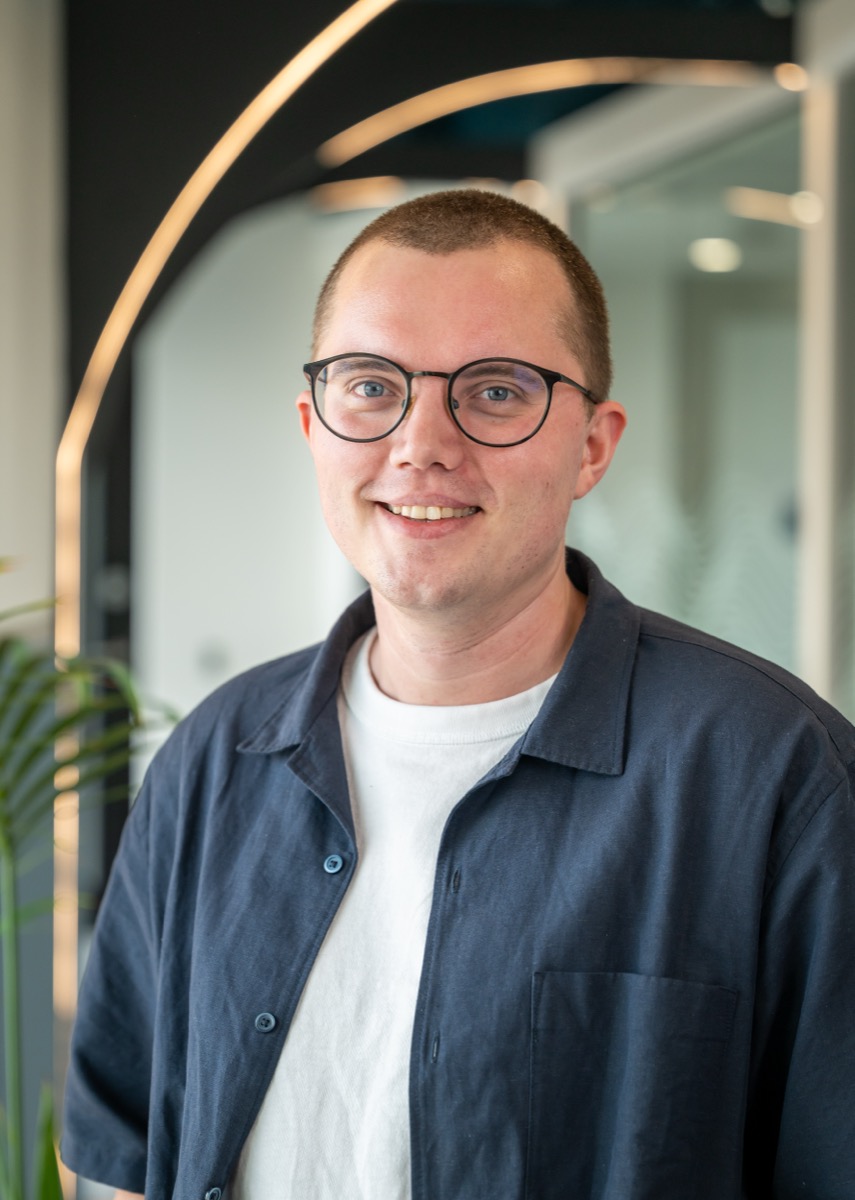
Based in Frankfurt am Main. Roles in financial services, international software, and consumer goods, including a region scaled from 70 to over 100 employees as HR Manager. More about me
Frequently asked questions about Frankfurt and Rhine-Main
Are you on-site in Darmstadt, Wiesbaden, Mainz, Offenbach, and Hanau as well?
Yes. All five are within 10 to 40 minutes of Frankfurt by S-Bahn or regional train, and I treat them like Frankfurt itself: fixed on-site days matched to the mandate, several a week where a works council negotiation or a restructuring needs it.
How quickly can you start in Frankfurt?
Usually within two weeks of engagement. As a sole practitioner without a provider in between there are no internal allocation rounds. Whether your preferred start date is possible I say on the first call.
Do you work in English with our international leadership?
Yes, and that is the normal case in Frankfurt. Leadership meetings, reporting to the group, and candidate interviews run in English. Works council sessions, employment contracts, and labour court correspondence run in German, which I handle.
Our German entity is small, around 60 people. Is that too small for an interim mandate?
No. Companies between 50 and 500 employees are the range the role is built for. At 60 people an HR lead vacancy is often more dangerous than at 400, because there is no team to cover and the managing director ends up doing HR at night.
Can the mandate switch to fixed days later?
Yes. A full-time interim mandate for the vacancy and a later switch to one or two fixed days a week is a common path in Rhine-Main, particularly for subsidiaries that need ongoing senior HR presence without a full-time seat. Details under Fractional HR Frankfurt.
Do you also cover the Frankfurt airport and Gateway Gardens area?
Yes. The airport business district and the logistics operations around it are part of the Frankfurt market, with their own shift patterns and works council traditions. Travel time from the city centre is under 15 minutes.