
Who Fractional HR is for in Frankfurt
Frankfurt's employer market is dominated by large banks, insurers, and international headquarters, and between them sits a wide layer of companies with 50 to 200 employees: the German entity of a foreign software or consulting group, a fintech that has grown past the founder-does-HR stage, a professional services firm, a logistics or trading company near the airport. These companies usually have HR: an experienced generalist, sometimes an assistant, a payroll provider. What they do not have is a senior HR lead who sits in the leadership meeting, holds the works council relationship, and takes the decisions the generalist should not have to take alone.
A full-time HR lead at that size is often not the right investment. The role would be half strategic, half filling in for the generalist, and in Frankfurt's market a senior HR profile costs what the large employers pay. Fractional HR solves the gap differently: one or two fixed days a week of senior leadership, on-site, for as long as the company needs it, with the generalist running the routine in between. The company gets the seat at the table without the seat's full cost, and the generalist gets a lead instead of a vacancy.
For international subsidiaries in Frankfurt the model has a second advantage. The group's HR function abroad provides frameworks, systems, and compensation logic; what it cannot provide is German employment law, the works council, and the collective agreement. A Fractional HR lead who works in English with the group and in German with the works council fills exactly that gap on two days a week, which is usually all the German specifics need once the structure is in place.
Typical situations for Fractional HR in Frankfurt
The HR generalist is good but alone
She runs contracts, payroll, and hiring for 90 people and is now expected to handle a works council election, a bonus scheme, and two dismissals. She needs a lead, not a replacement.
The group wants a German HR lead in the leadership meeting
The country manager reports abroad, the leadership team works in English, and headquarters has asked who owns HR in Germany. The honest answer is nobody senior. Two days a week changes that.
Growth from 60 to 150 outpaced the structure
Contracts in three different templates, no compensation logic, no HRIS, a first works council on the horizon. Structure has to be built, and it takes two days a week for a year, not five days for three months.
What two fixed days a week look like
HR in the room where decisions are made: hiring plan, organisation, pay, difficult cases. The one-page report from the previous week on the table.
The questions the generalist saved for me, the cases that need a decision, interviews with candidates who should meet a senior person, contracts that need a second pair of eyes.
Works council session if scheduled, hearings prepared, the works council agreements in progress. Otherwise the structural work: compensation logic, HRIS, policies, the AI routines for the team.
Open door for managers with people questions, the difficult conversations that need a senior person present, and the plan for what the team does until Tuesday.
Between the fixed days, the HR team runs the routine and reaches me for anything urgent: a resignation, a works council request with a deadline, an accident. That is part of the engagement, not an extra. What is not part of it is doing the generalist's job. Fractional HR leads; it does not replace the team, and if the team disappears the model changes to full-time interim. The full description of the two scope models is on Fractional HR.
Fractional or Interim: which fits a Frankfurt company
Both run with me personally. The difference is scope and situation. Interim is full-time for a vacancy or a transformation. Fractional is one or two fixed days for a company that has HR but lacks the lead. A switch in either direction is possible when the situation changes, which in Frankfurt it does.
The full comparison, including a permanent hire: Interim, Fractional, or a Permanent Hire · Full-time in Frankfurt: Interim HR Manager Frankfurt
On-site in Frankfurt and Rhine-Main
Frankfurt is my base, which is what makes Fractional on-site realistic here in a way it is not in Berlin or Munich. The fixed days are delivered in your office, whether that is in the city, in Eschborn, at the airport business district, or in Darmstadt, Wiesbaden, Mainz, or Offenbach, all of which are ten to forty minutes by S-Bahn or regional train and involve no travel cost or hotel. A fixed Tuesday in Darmstadt and a fixed Thursday in Frankfurt for a company with two sites is an ordinary arrangement. So is coming in on a Wednesday when the works council calls an extraordinary session, because the distance allows it.
The days are agreed in the services contract and kept. If a public holiday falls on a fixed day, it is moved, not dropped. If the company's rhythm changes, for example because the leadership meeting moves, the days move with it by agreement. What the quarterly review looks at is whether one or two days are still the right number, and whether the model still fits the situation.
Works council, group, and employment status
The works council (Betriebsrat) is the elected employee body that German law provides for in any establishment with five or more permanent employees, and a Fractional HR lead is, on the fixed days, its counterpart on the employer side. Under Section 87 of the Works Constitution Act (BetrVG) the council has a consent right on working time, pay structures, and technical systems capable of monitoring employees, including the group's HRIS and any AI tools; under Section 102 every dismissal needs a prior hearing. For a Frankfurt subsidiary the practical arrangement is that works council sessions fall on a fixed day, hearings are prepared by the generalist and signed off by me, and the group receives a short English summary after each session on what was agreed and what remains open.
One question international managing directors ask early is whether a fixed-days arrangement creates an employment status problem under German law, where a contractor who is in practice integrated like an employee can be reclassified, with social security consequences for the company. The answer lies in how the engagement is built: a services contract with defined deliverables rather than hours to be filled, my own methods and tools, no place in the company's duty roster or holiday planning, other clients in parallel, and fixed days that are agreed as a service rhythm rather than imposed as working time. The criteria and how I set up the contract are explained under Fractional HR and Employment Status. The day-rate logic for the fixed-days model is under What Fractional HR costs.
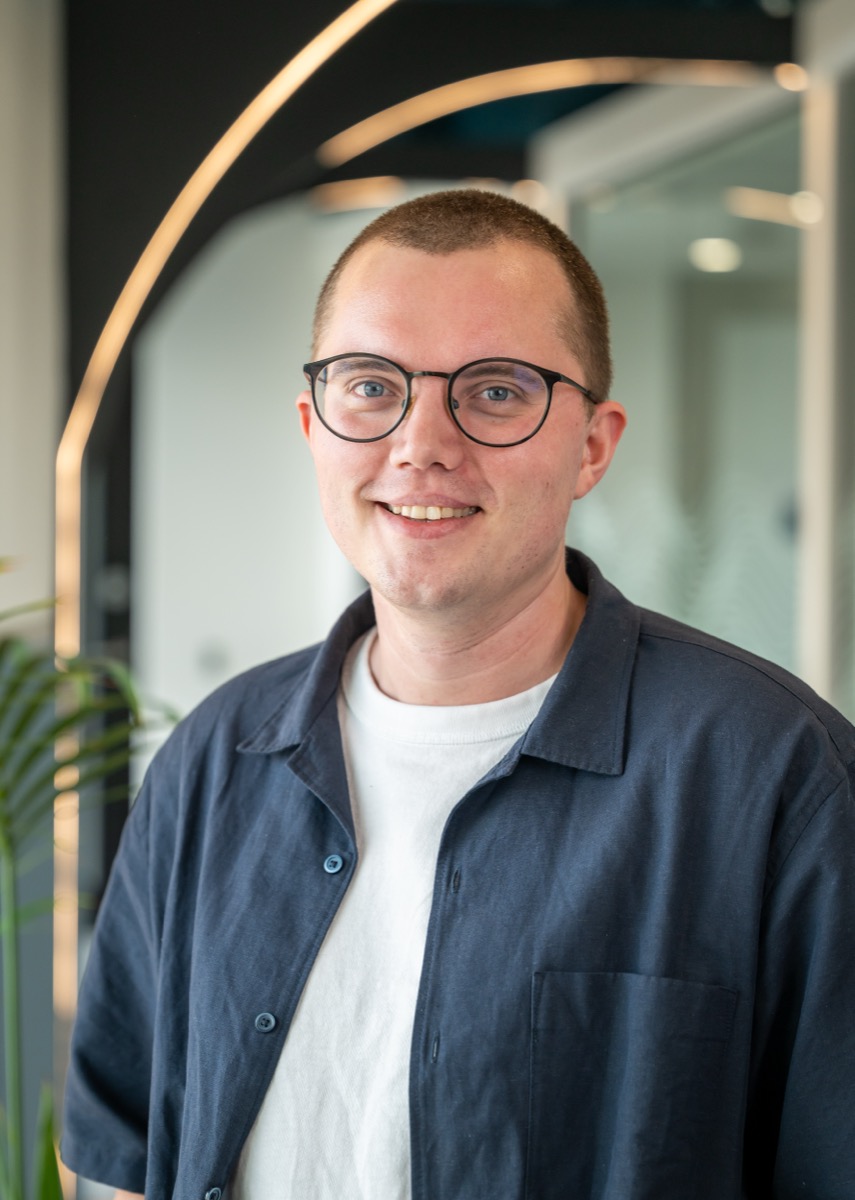
Based in Frankfurt am Main. HR leadership in international software and consumer goods companies, works council agreements negotiated, HR structures built during growth. More about me
Frequently asked questions about Fractional HR in Frankfurt
How many days a week is typical for Fractional HR in Frankfurt?
One or two fixed weekdays, depending on company size and situation. A company of 60 people with a stable HR generalist usually needs one day. A company of 150 with a works council, active hiring, and a group abroad needs two. The days are fixed, so that the team, the managers, and the works council know when I am in.
Are the days always on-site, or can some be remote?
In Frankfurt and Rhine-Main the fixed days are on-site as a rule, because the point of Fractional is presence: being in the leadership meeting, being available to managers, meeting the works council in person. Individual remote days are possible when the agenda is desk work, but the standard is on-site.
Can we switch to a full-time interim mandate if things change?
Yes. Fractional to Interim, for example when the HR generalist leaves or a restructuring lands, and Interim back to Fractional once the situation stabilises, are both common in my Frankfurt engagements. The services contract allows the change by agreement.
Is Fractional HR a risk in terms of German employment status?
It is a question worth asking, and the answer lies in how the engagement is set up: a services contract with defined deliverables, my own tools and working methods, no integration into the company's duty rosters, and other clients in parallel. The page on Fractional HR and employment status explains the criteria.
Our group has a global HR function. What does the Fractional lead do that the group cannot?
Everything specifically German, on the ground: the works council relationship, employment contracts that hold in a German court, the collective agreement where one applies, dismissals with proper hearings, and the translation of group frameworks into local practice. The group keeps the frameworks and the systems.
What is the minimum duration?
Three months. Below that, a defined project or a half-day project sprint is the better format. Most Fractional engagements in Frankfurt run six to eighteen months, with a review every quarter.