The Cologne employer market, seen from HR
Cologne is Germany's fourth-largest city and the centre of a metropolitan region that includes Bonn, Leverkusen, and the industrial belt along the Rhine. Its economy has three distinct pillars. Media and broadcasting: the public broadcaster WDR, the RTL group, a dense production and games industry, and the agencies that live off them. Insurance and financial services: several of the largest German insurers have their headquarters in Cologne, with a supplier ecosystem of service and IT companies around them. Chemicals and industry: Bayer and Lanxess in Leverkusen, Ford in Niehl, the chemical parks at Dormagen and Knapsack, and a wide Mittelstand of machinery, automotive supply, and packaging firms in the Bergisches Land and along the river.
Bonn adds the federal ministries that stayed after the capital moved, the headquarters of Deutsche Telekom and Deutsche Post DHL, the UN campus, and a research cluster around the university. For HR that means a region with more large employers per square kilometre than most, and correspondingly many mid-sized companies and subsidiaries that live in their orbit and compete with them for HR talent.
The competition for experienced HR leads is somewhat less fierce than in Frankfurt or Munich, which shortens a permanent search to four or five months rather than six or seven, but the profiles a company needs are specific. Media employers need someone who understands project contracts, fixed-term rules, and the collective agreements of the broadcasting sector. Insurers and chemical companies need someone at ease with a formal, union-trained works council and a collective agreement several hundred pages long. The Rhineland Mittelstand needs someone who can do both without a corporate apparatus behind them.
Typical HR situations in Cologne and Bonn mandates
The HR lead of an insurance service company goes on parental leave
Twelve months, an experienced works council, the insurance collective agreement, a group HR department that expects monthly reporting, and a successor who is not to be hired because the role is coming back. A classic bridge.
A US media technology group restructures its Cologne studio
Decision taken abroad, 140 employees in Cologne on a mix of permanent and project contracts, a works council elected last year. Selection, consultation, social plan, communication, and a team that has to keep producing.
A Bergisches Land machinery firm grows through acquisition
Two sites, two works councils, two sets of contracts and pay grades, one owner who wants a single HR function. Integration of processes, systems, and co-determination over six months.
From enquiry to handover: the five steps
You write, call, or book a slot. Within one working day you get a reply from me, not from an assistant or a provider.
You describe the situation: who left, when, what is open, whether there is a works council. I say honestly whether I can help, from when, and what the day rate is.
A few pages: scope, duration, on-site days, confidentiality, the first four weeks as a mutual trial period, the handover as a deliverable. No hidden fees, no provider margin.
Full on-site weeks for the assessment: open cases, deadlines, contracts, payroll, works council, people. The day-to-day runs from day one.
Documented processes, an open-items list with status, the successor onboarded by me if wanted, the works council introduced personally. Then I am gone.
The five steps are the same in every city. What is different in Cologne is that step four is easier: because I commute rather than travel, an earlier start, a shifted week, or an extra day at short notice are all possible without rebooking a hotel. The full description of the role, including what I do not do, is on the role page Interim HR Manager. How the day rate compares with a permanent hire and with a provider is under What an Interim HR Manager costs.
The presence model: a commute, not a hybrid arrangement
Frankfurt to Cologne Hauptbahnhof on the high-speed line through Limburg and Montabaur takes just over an hour, with departures every half hour and a dedicated stop at Siegburg/Bonn on the way. That changes the model compared with Berlin, Munich, or Hamburg. In Cologne I am on-site as often as the mandate needs, three days a week as the standard and every day where a works council negotiation, a restructuring, or an integration demands it, with no hotel, no flat travel arrangement, and the possibility of coming in tomorrow if the works council calls an extraordinary session.
Bonn is reached directly from Frankfurt via Siegburg/Bonn in around fifty minutes plus a short regional connection, or through Cologne in an hour and twenty. Leverkusen, Bergisch Gladbach, Hürth, Brühl, and the chemical parks along the Rhine are all within half an hour of Cologne Hauptbahnhof by S-Bahn or regional train. On-site days are planned for wherever the office and the works council are, not for the city centre. The rhythm is agreed in the contract and changes only by agreement.
Works councils, collective agreements, and language in the Rhineland
The works council (Betriebsrat) is the elected employee body that German law provides for in establishments with five or more permanent employees. In Cologne's insurance and chemical employers it is typically long-established, trained by the union, and professionally advised, and it works under a collective agreement (Tarifvertrag), an industry-wide contract between employers' association and union that sets pay grades, hours, and holiday for every bound employer. Under Section 87 of the Works Constitution Act (BetrVG) the works council has a consent right on working time, on pay structures such as bonus schemes, and on any technical system capable of monitoring employees, which includes the HRIS and AI tools. Under Section 99 it is involved in every hiring, transfer, and regrading in companies above twenty employees. Under Section 102 every dismissal needs a prior hearing.
The media sector adds its own layer. Broadcasting and production employers work with a high share of fixed-term and project contracts and with freelancers, which brings the Part-Time and Fixed-Term Employment Act (TzBfG) and the rules on false self-employment into everyday HR. The public broadcasters and their subsidiaries have their own collective agreements and a works council culture shaped by decades of negotiation over freelance status. Companies that supply them inherit some of that culture and much of its litigation.
For an international leadership team, my routine in Cologne is the one I use everywhere: works council chair met in the first week, in German, before any hearing is due; sessions minuted and shared; a briefing in English for the leadership team and the group afterwards; a deadline calendar the managing director can see. What the regulated, documentation-heavy version of this looks like is described in the case study Running HR Across Twelve Countries in a Regulated Industry. Restructuring in the Rhineland, with a reconciliation of interests and a social plan, is described under Restructuring and Social Plan.
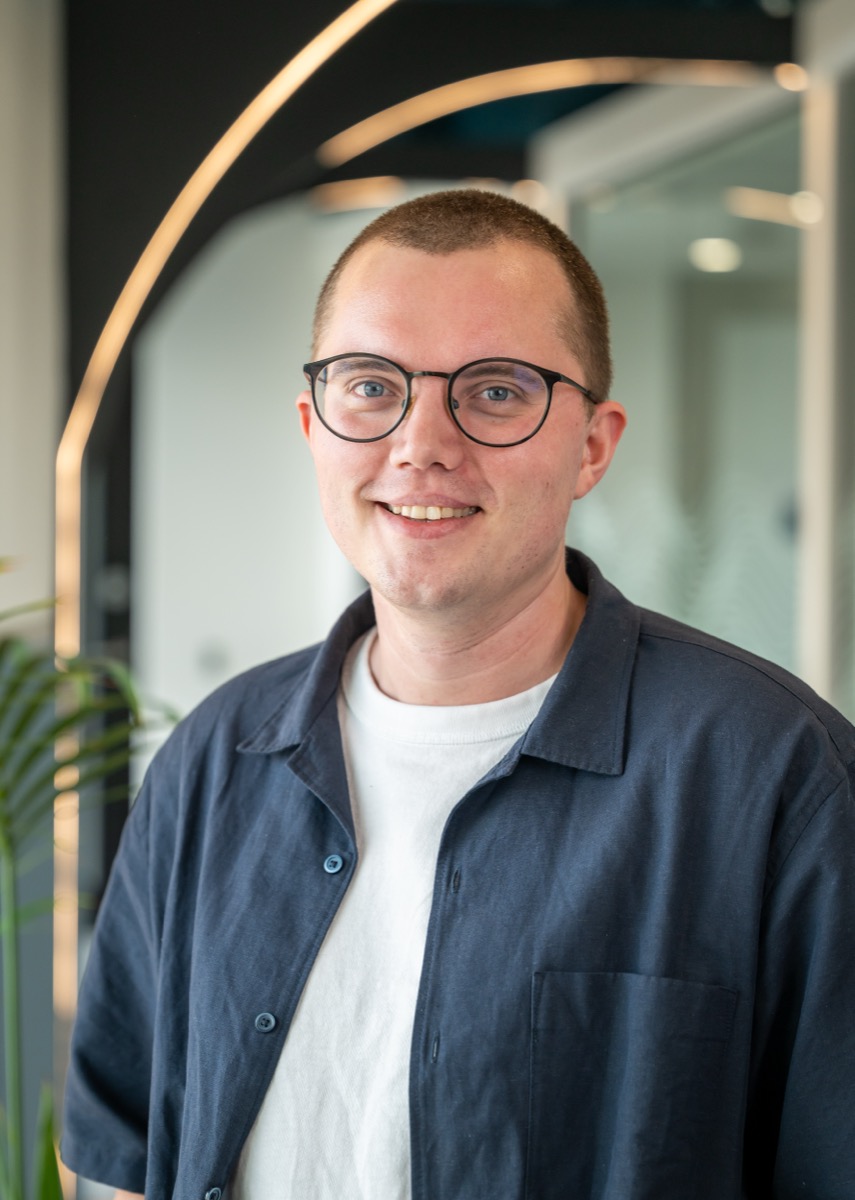
HR across twelve countries in a regulated financial institution; reorganisation across nine countries at a software company in full compliance with co-determination; works council experience from a consumer goods group. More about me
Frequently asked questions about Cologne and Bonn
How far is Cologne from Frankfurt for you?
Just over an hour by ICE on the high-speed line to Cologne Hauptbahnhof, with departures every half hour. That is a commute, not a trip. Cologne mandates run with three or more on-site days a week and no hotel, which makes them closer to Frankfurt mandates than to Berlin or Hamburg.
Do you also cover Bonn, Leverkusen, and the Cologne surroundings?
Yes. Bonn is twenty minutes from Cologne by regional train and directly reachable from Frankfurt via Siegburg. Leverkusen, Bergisch Gladbach, Hürth, and the chemical sites along the Rhine are within thirty minutes of Cologne Hauptbahnhof. On-site days are planned for wherever the site and the works council are.
Our parent company is in the US and wants everything in English. Is that a problem?
No, it is the normal case. Leadership meetings, group reporting, and interviews for international roles run in English. Works council sessions, employment contracts, and anything that goes to a German court run in German. I hold both, and I brief the group after every works council session in English.
How quickly can you start in Cologne?
Usually within two weeks of engagement. Because Cologne is a commute rather than a hybrid arrangement, the first two weeks on-site are easy to schedule at short notice, including a start that is brought forward if the predecessor leaves earlier than planned.
Do you have experience with regulated employers such as insurers?
Yes, from HR work across twelve countries in a financial institution with heavy documentation requirements. Insurers in Cologne have a comparable environment: supervisory expectations, a collective agreement for the insurance industry, and works councils that know it well.
What if we only need someone for a defined project rather than the full role?
Then the project format fits better: a restructuring, an HRIS rollout with works council agreement, a carve-out. Scoped, with a deadline, and I am gone at the end. The first call establishes which of the two you need.